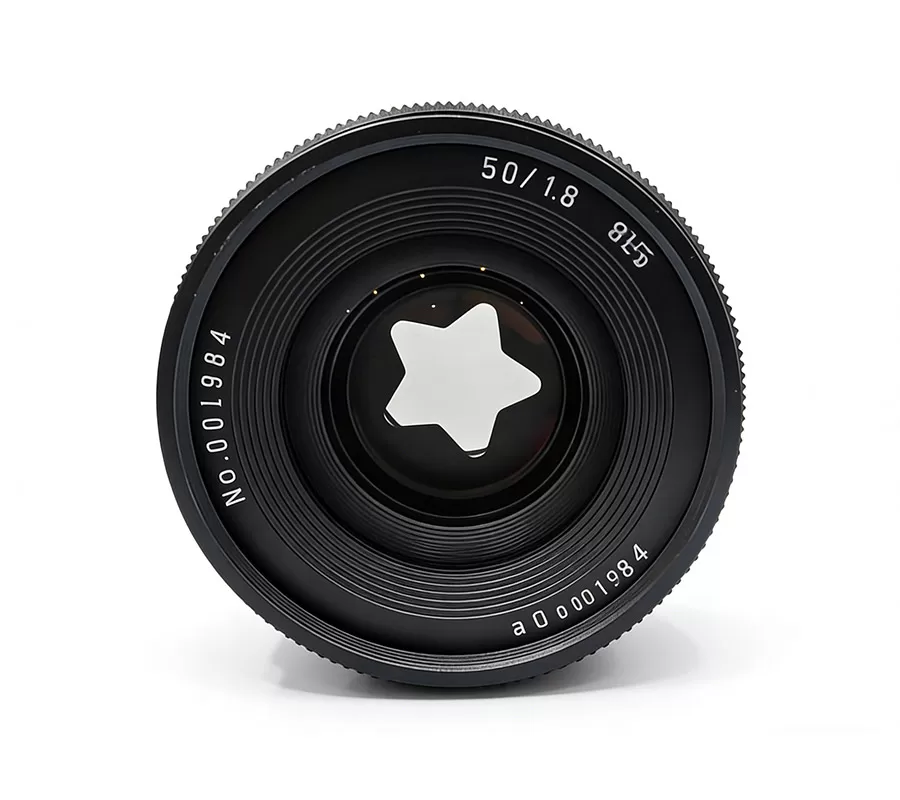
High-resolution imaging systems face unforgiving physical limits. When moving to 4K resolution in machine vision and intelligent transportation systems (ITS), sensor resolution alone does not guarantee image fidelity. The optical interface between the sensor and the optics determines whether your system resolves fine details or fails due to blur and edge degradation.
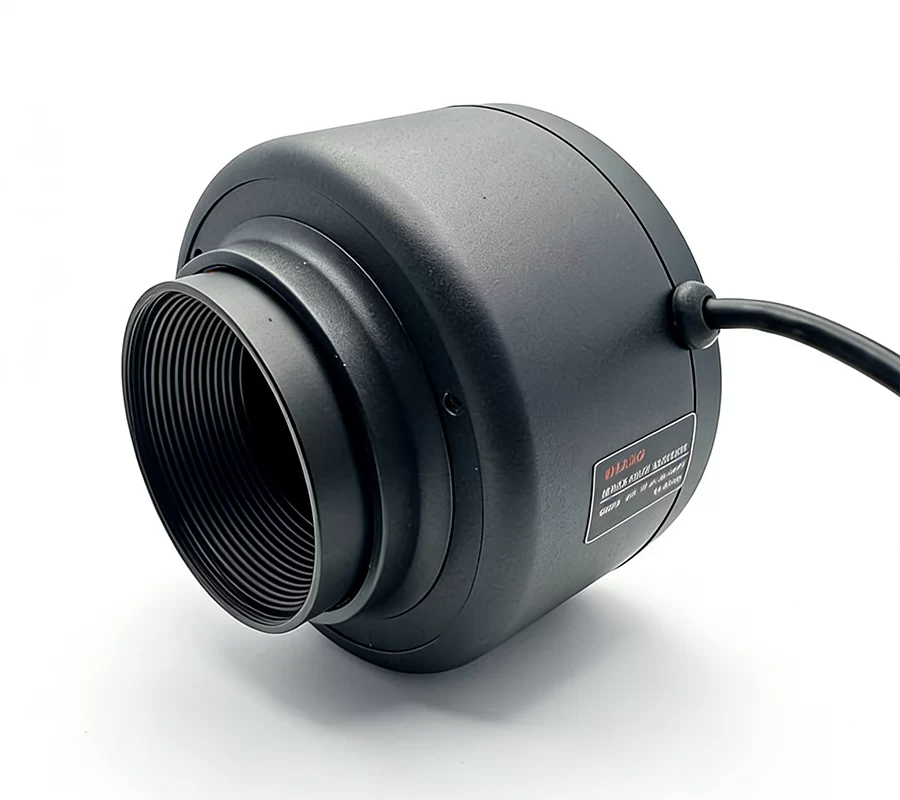
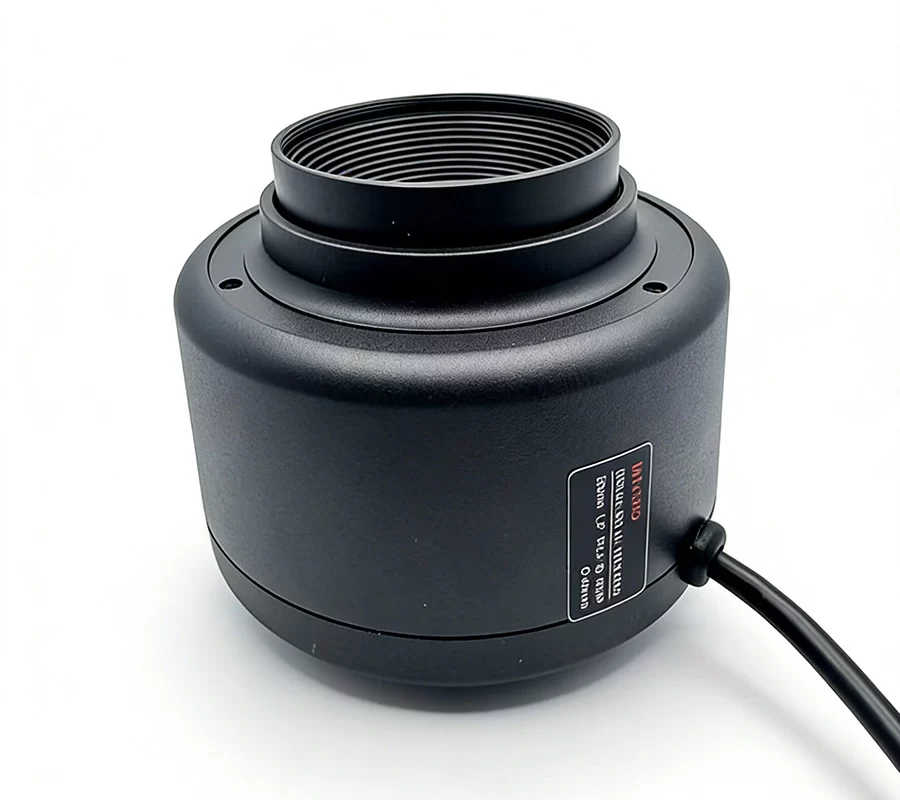
Selecting a 1/1.7'' IR-corrected varifocal lens offers an optimal balance between light intake, pixel density, and optical versatility. However, pairing this lens with an improperly matched image sensor causes severe vignetting, wasted field of view (FOV), or blurred chromatic artifacts. At Josight Optics, we design precision optics that help systems engineers navigate these spatial constraints and extract maximum clarity across visible and near-infrared bands.
Need technical specifications or sample testing for an upcoming integration? Submit an engineering inquiry to consult with our optical design team.
1. The Physics of Sensor Size and Lens Matching: Why 1/1.7-Inch Matters
Optical matching requires the lens image circle to align precisely with the active area of the image sensor. A 1/1.7-inch sensor format has emerged as an industry sweet spot for high-performance 4K machine vision cameras.
The 1/1.7-Inch Sensor Architecture in 4K
Modern 4K sensors in the 1/1.7'' category—such as popular CMOS sensors from Sony Semiconductor Solutions—feature an active diagonal of approximately 9.3 mm. With an effective resolution of roughly 3840 x 2160 pixels, the pixel pitch sits between 1.85 µm and 2.0 µm.
This compact pixel layout delivers exceptional detail, but it places extreme demands on the lens. The lens must project an image circle of at least 9.3 mm while resolving fine spatial frequencies without introducing optical aberrations.
The Hidden Costs of Optical Mismatches
When you mount a lens on an incompatible sensor size, performance degrades immediately:
- Lens Image Circle Smaller Than Sensor: Using a 1/2'' or 1/2.8'' lens on a 1/1.7'' sensor produces heavy mechanical vignetting. Black, shadowed borders obscure corners, destroying edge inspection capabilities.
- Lens Image Circle Much Larger Than Sensor: Using a 1'' lens on a 1/1.7'' sensor avoids vignetting but narrows the effective angular field of view. You pay a financial premium for unused glass while adding unnecessary weight and physical bulk to your camera housing.
Matching a dedicated 1/1.7'' optical design with a 1/1.7'' sensor ensures 100% sensor coverage, maintains edge-to-edge illumination, and protects system budgets.
2. Resolving 4K Pixel Pitch: Optical Engineering Challenges
A camera sensor can only register the light that the lens cleanly delivers. Packing over 8 megapixels onto a 1/1.7'' sensor requires rigorous optical engineering to prevent resolving bottlenecks.
High MTF at High Spatial Frequencies
Modulation Transfer Function (MTF) quantifies an optical system's ability to transfer contrast from the subject to the sensor at specific spatial frequencies. Because a 1/1.7'' 4K sensor has pixels under 2.0 µm, the Nyquist frequency often exceeds 250 to 270 line pairs per millimeter (lp/mm).
Standard industrial lenses suffer severe contrast drop-off beyond 100 lp/mm. A purpose-built 4K machine vision lens uses specialized aspherical glass elements to sustain high MTF values across the entire field. This prevents corners from turning soft during automated defect detection.
Controlling Optical Distortion
Machine vision algorithms depend on geometric accuracy. In applications like surface measurement, robotic guidance, or license plate recognition (ANPR), barrel or pincushion distortion warps pixel-to-millimeter calibration.
Precision 1/1.7'' optics minimize TV distortion to negligible thresholds—often below 1% to 2% across the focal range. Minimizing physical distortion reduces the processing overhead required for software rectification algorithms.
3. The Decisive Role of IR Correction (Day/Night Confocal Imaging)
Many machine vision tasks operate under mixed lighting, while traffic monitoring systems operate 24 hours a day. Transitioning between daytime illumination and nighttime infrared illumination creates optical complications that standard lenses cannot handle.
Understanding Focus Shift
Optical glass bends visible light (400–700 nm) more sharply than near-infrared light (NIR, 850–940 nm). In conventional optics, this wavelength variation causes focus shift: the visible image and the NIR image focus on different physical planes along the optical axis.
If you focus a non-IR lens during daylight, switching on an 850 nm infrared illuminator at night results in a soft, out-of-focus image. Refocusing the camera for the night then blurs daytime operation.
Detailed technical papers published by organizations like the European Machine Vision Association (EMVA) emphasize that spectral consistency is fundamental for standardized sensor performance across variable lighting conditions.
True 24/7 Confocal Sharpness
A true 1/1.7'' IR-corrected varifocal lens resolves this challenge by incorporating Extra-Low Dispersion (ED) glass and specialized multi-layer broadband coatings. These optics align visible and NIR focal points onto the exact same focal plane.
The benefits to field operations include:
- Consistent focus 24 hours a day without motorized readjustment.
- Maximum sharpness during sudden transitions between daylight and IR strobes.
- Elimination of chromatic aberrations (color fringing) around high-contrast edges.
4. Strategic Advantages of Varifocal Optical Design
Fixed-focal-length lenses offer exceptional sharpness, but they lack flexibility when deployment environments vary. A varifocal design introduces adjustable focal lengths, solving real-world installation hurdles.
Field Flexibility vs. Fixed Optics
Industrial lines change, target distances fluctuate, and field-of-view requirements shift during system trials. A varifocal lens allows field engineers to manually tune the optical angle and focal point to frame the target object perfectly without relocating camera mounts.
This adjustability is invaluable in retrofits where physical space limits camera placement, making it simple to calibrate working distances on site.
Inventory Consolidation and Cost Control
Managing dozens of fixed-focal lens SKUs increases procurement complexity and spare-part carrying costs. Standardizing on a versatile focal span—such as 3.8-16mm or 11-40mm—allows system integrators to use one lens model across multiple inspection stations.
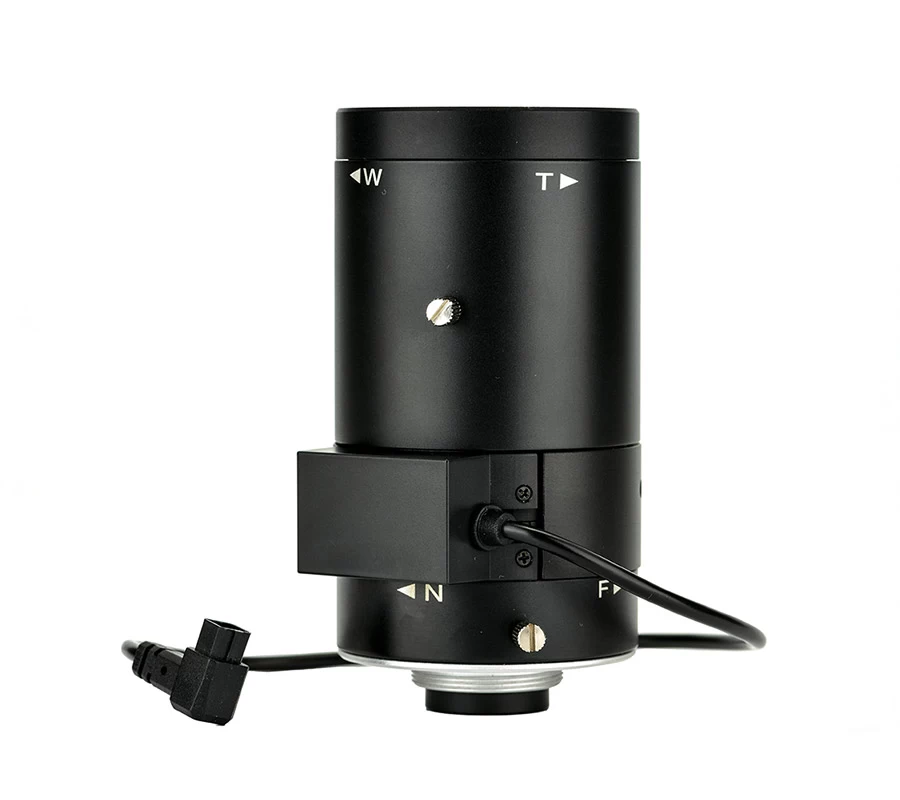
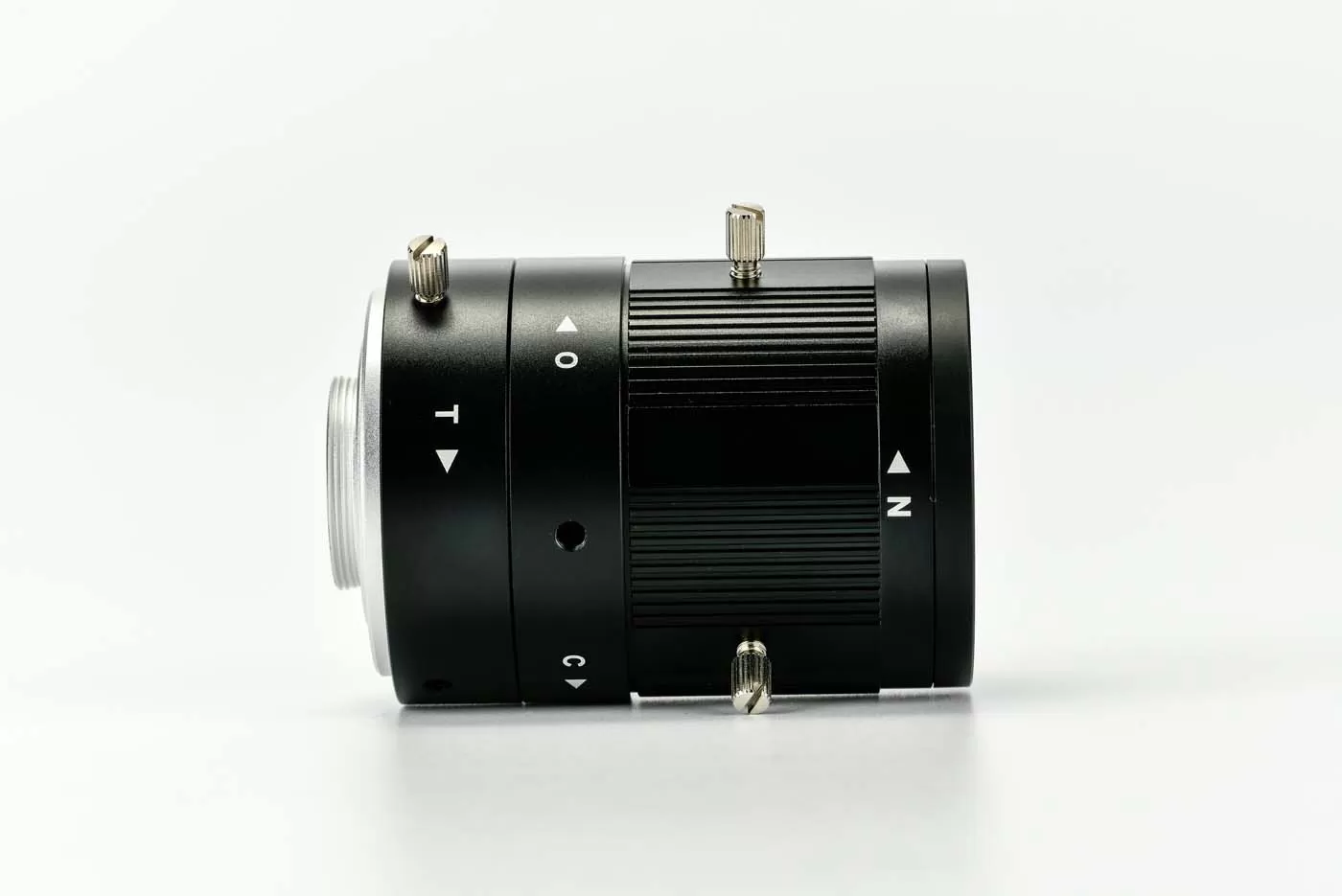
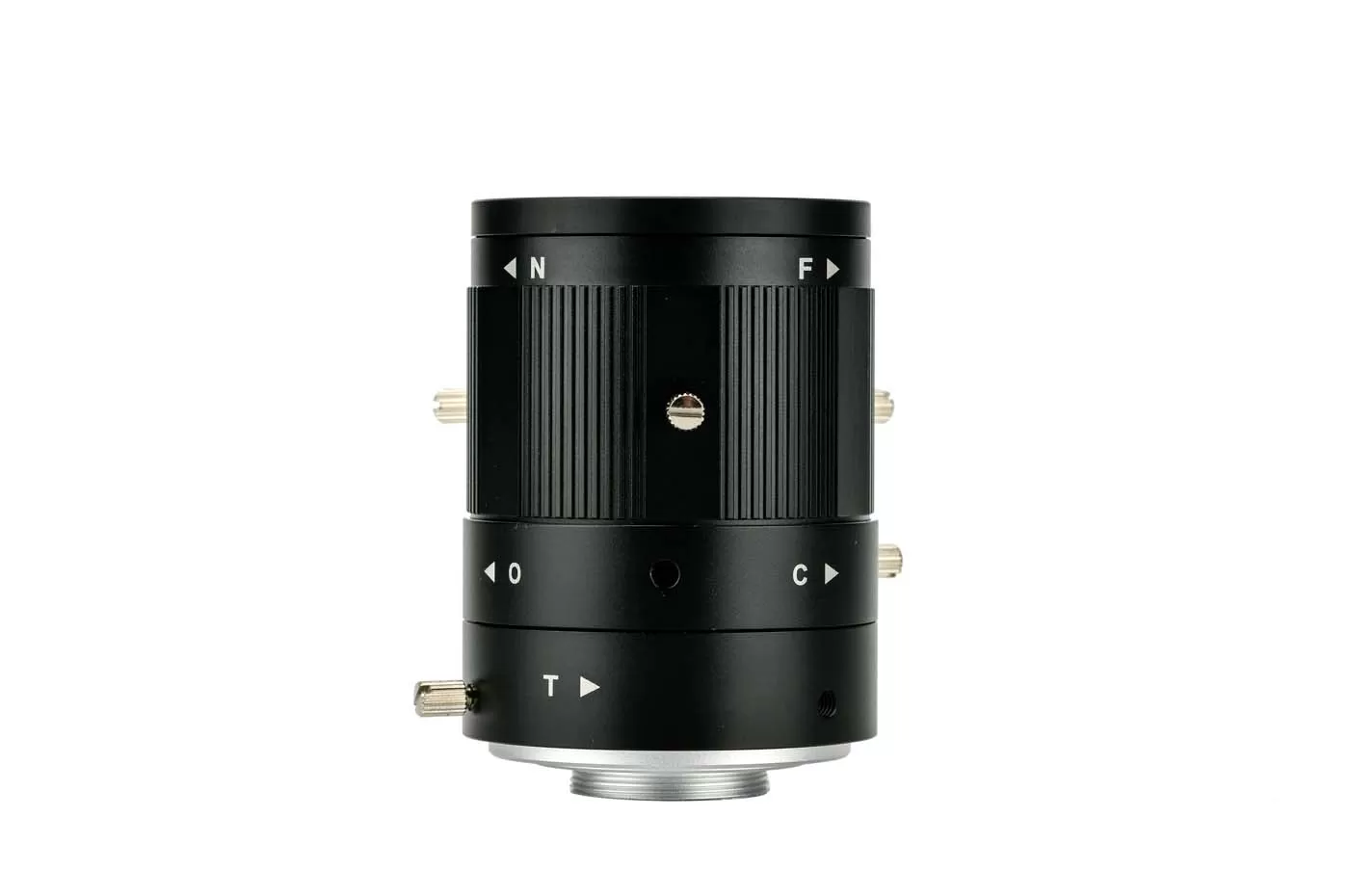
Josight Optics engineers robust varifocal assemblies with positive locking mechanisms for focus, zoom, and iris rings. Once dialed in, the lens resists industrial vibration and temperature swings, ensuring zero optical drift over long operating lifespans.
5. High-Value Applications for 1/1.7'' IR-Corrected Varifocal Lenses
The combination of a compact 1/1.7-inch optical format, 4K resolving capability, and day/night confocal precision makes this lens class essential across demanding sectors.
Intelligent Transportation Systems (ITS) and ANPR
Traffic monitoring requires constant surveillance over multiple highway lanes. Cameras must capture high-speed license plates during bright midday sun and under dark conditions supported by 850 nm pulsed illuminators.
A 1/1.7'' 4K IR-corrected varifocal lens provides the high resolution needed to resolve small alphanumeric characters across two or three lanes simultaneously. The IR correction ensures that plate retro-reflections remain crisp at midnight without software focus compensation.
Automated Optical Inspection (AOI)
Electronics manufacturing relies on multispectral lighting. Inspecting printed circuit boards (PCBs) often requires white light for component placement verification and infrared lighting to inspect solder joints through silicon layers. Optical guidance principles documented by Edmund Optics highlight how achromatic and apochromatic design prevents image degradation across these multi-band setups.
Using a confocal varifocal lens lets technicians swap illumination bands instantly without mechanical focus adjustments between inspection cycles.
Critical Perimeter and Infrastructure Security
Border control, energy substations, and rail yards require wide situational awareness paired with optical clarity. The 1/1.7'' sensor format balances wide-angle coverage with pixel sensitivity in low light, capturing facial details and physical anomalies at long stand-off distances.
6. Integration Checklist for Machine Vision Engineers
Before standardizing on a lens for production builds, run through this selection checklist:
| Parameter | Consideration | Recommendation for 1/1.7'' 4K Systems |
|---|---|---|
| Mount Type | Flange focal distance matching | Verify C-Mount (17.526 mm) vs. CS-Mount (12.5 mm). C-mount remains the industrial standard for 4K. |
| Aperture (F-Number) | Light gathering vs. Depth of Field (DOF) | Fast apertures (e.g., F1.4 to F1.8) benefit low light, but stopping down to F2.8-F4 maximizes sharpness across the entire sensor frame. |
| Locking Screws | Vibration and shock survival | Ensure independent thumb or set screws exist for zoom, focus, and iris to prevent drift in industrial plants. |
| Spectral Transmission | Visible through NIR throughput | Check anti-reflective coating specs across 400 nm to 950 nm to minimize ghosting and maximize IR sensitivity. |
Frequently Asked Questions (FAQ)
Q1: Can I use a 1/1.7'' lens on an industrial camera with a 1/2.8'' sensor?
A1: Yes. A 1/1.7'' lens produces an image circle larger than a 1/2.8'' sensor. You will not see vignetting, and you will use the sharpest, center portion of the lens glass. However, your effective field of view will be cropped significantly, behaving like a telephoto optic.
Q2: Why is an IR-corrected lens required if my camera sensor already has an IR-cut filter?
A2: Cameras with switchable IR-cut filters (ICR) remove the filter in low-light conditions to accept infrared illumination. Without an IR-corrected lens, removing the filter causes an immediate focus shift, blurring your nighttime image even though daytime performance was crisp.
Q3: What is the difference between a varifocal lens and a true optical zoom lens?
A3: A true optical zoom (parfocal) lens maintains its focus point while you change the focal length. A varifocal lens requires manual refocusing after you adjust the zoom angle. In machine vision, varifocal lenses are preferred because they are more compact, mechanically stable, and cost-effective for fixed-position systems.
Q4: How does pixel size influence my lens choice when working with 4K resolution?
A4: Smaller sensors pack 4K resolution into smaller pixels (e.g., ~1.85 µm on a 1/1.7'' sensor vs. ~3.76 µm on a full-frame sensor). Smaller pixels require higher optical resolving power (measured in lp/mm). You must select a lens rated for high-density 4K sensors to avoid optical blur caused by diffraction and low MTF.
Q5: Can modern image processing software correct chromatic aberration instead of using an IR-corrected lens?
A5: Software algorithms can correct lateral chromatic aberration (color fringing at the edges) to some degree, but they cannot fix longitudinal chromatic aberration (focus shift along the optical axis). When NIR wavelengths focus behind the sensor plane, physical image information is lost, and software sharpening cannot reconstruct that lost optical detail.
Accelerate Your Optical Integration
Choosing the right optical components early protects your engineering timeline and eliminates costly camera field failures. Josight Optics manufactures industrial-grade 1/1.7'' IR-corrected varifocal lenses engineered specifically for 4K industrial automation, intelligent traffic platforms, and edge-AI vision applications.
Contact our technical sales team today to discuss your project requirements, request detailed optical performance curves (MTF and distortion data), or order qualification samples for lab evaluation.